

“Is the cleaner I’m using safe for my reptile?”
Of all the joys of keeping reptiles, enclosure cleaning is not on the top of anyone’s list. But keeping your scaly friends’ homes spick and span is a “non-negotiable” when it comes to their health.
But before you get to scrubbing, remember: not all cleaning products are safe for your reptile (even commonly used ones).
We invite you to take just a quick minute to learn the best (and safest) cleaners for reptile enclosures. We’ll also reveal a couple of products you should NEVER use around your pets. So read on to make sure your cleaning routine isn’t putting your reptiles at risk!
Why Your Choice of Cleaners Matters
First things first: why is choosing the right cleaner such a big deal? Well, reptiles are sensitive creatures. What might seem harmless to us could be harmful to them. Their respiratory systems and skin are different from ours, so we need to be extra careful about what we use in their environment.
(Actually, improper use of some common cleaners can harm YOUR health, too – just sayin’!)
You might be surprised to learn that there are many good cleaners for reptile enclosures that won’t harm you or your reptile when used properly. But first, let’s take a look at what NOT to use.
Two Cleaners Never to Use for Reptile Cages
Here are a couple of common cleaning solutions you’ll want to avoid. These two popular cleaners might be great for cleaning your kitchen, but they’re a big no-no for reptile enclosures. Even when diluted, the vapors can be toxic to your scaly pals. And if they happen to lick any residue? Yikes!
- Bleach solutions. According to the Merck Veterinary Manual, exposure to chlorine bleaches may result in irritation to skin, GI, and/or eye tissues as well as significant respiratory irritation in all species. Bleach creates fumes that can persist in an enclosure even after cleaning is done. (If you’ve ever walked into a recently cleaned bathroom and felt your eyes and nose burning from chlorine, you know what this is like. Imagine being stuck in there all day – that’s what your reptile experiences if there is bleach residue in their cage!)
- Ammonia-based cleaners. Ammonia is just plain highly irritating to both skin and respiratory tissues (not to mention the GI tract if it is ingested!) Ammonia fumes can persist for hours without proper ventilation (such as inside a recently-cleaned enclosure.) Talk about burning eyes. Not recommended for use in reptile cages!
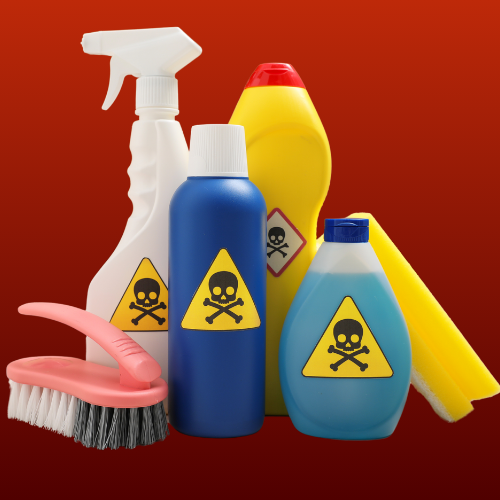
One last word of caution: when bleach and ammonia combine, they create an extremely toxic gas that can be quickly fatal to both your reptile and you. Many people don’t realize that many household soaps, detergents and cleaners contain ammonia as an ingredient. So never mix cleaners, and never mix bleach with anything other than water – even soap!
Vet-Approved Safe Cleaners for Reptile Enclosures
Now for the good stuff! Let’s start with two reptile-friendly enclosure cleaning options that are widely used by veterinary hospitals and zoos:
Chlorhexidine
Despite its scary, chemical-sounding name, this is a favorite among reptile keepers and vets alike as one of the best and safest cleaners for reptile enclosures.
Chlorhexidine is a widely used antiseptic and disinfectant for both people and pets. It is effective against a wide range of bacteria and fungi. While powerful, it’s safe enough to be used for wound cleaning and in dental care.
Chlorhexidine is used in veterinary hospitals and zoos around the world as a disinfectant for reptile habitats. It is considered safe for use (non-toxic and non-irritating) around reptiles when diluted correctly. According to one school experiment, chlorhexidine was found to be more effective at killing bacteria in reptile enclosures compared to some commercial reptile-specific cleaners.
F10SC
Another top choice in the pro reptile world is F10SC. This is a biodegradable, broad-spectrum disinfectant that’s gentle on reptiles but tough on nasties.
The “F10” in F10SC stands for a proprietary designation used by the manufacturer, Health and Hygiene (Pty) Ltd, which developed the product. The “SC” stands for super concentrated.
F10SC is widely used in veterinary hospitals and zoos due to its effectiveness against bacteria, viruses, fungi, and spores. The product is recognized for its broad-spectrum antimicrobial properties and is suitable for disinfecting animal cages, including enclosures for reptiles, birds, and other exotic pets. It is non-toxic, non-corrosive, and safe for use around animals when diluted properly.
IMPORTANT: Both chlorhexidine and F10SC need to be diluted before use, so make sure to follow the instructions carefully to keep yourself and your animals safe.
Popular Commercial Cleaners for Reptile Enclosures
For physical cleaning of your reptile habitat, there are several safe commercial products available formulated specifically for cleaning terrariums and reptile enclosures:
- Oxyfresh is a non-toxic, biodegradable cleaner designed for reptile habitats. It uses stabilized chlorine dioxide, which is effective against bacteria, fungi, and viruses.
- Zilla’s Terrarium Cleaner is another option that’s safe for reptiles when used as directed. It’s formulated to break down organic waste and remove odors.
- Exo Terra’s Terrarium Glass Cleaner is specifically designed for cleaning glass terrariums without leaving streaks or residues that could harm reptiles. It is said to be effective at removing mineral build up from calcium and lime.
- Zoo Med Wipe Out is a liquid antibacterial cleaner, disinfectant, and deodorizer for terrariums and small animal cages. It kills pathogenic bacteria such as Salmonella choleraesuis and Pseudomonas aeruginosa.
- Absolutely Clean is a natural enzyme cleaner especially formulated for cleaning small animal cages, reptile enclosures, and terrariums. It is manufactured and sold by a small family business in Colorado.
Pros to using branded cleaners for reptile enclosures:
These products are generally safer alternatives to bleach or ammonia-based cleaners, as they’re formulated with reptile safety in mind. They typically don’t leave harmful residues and are less likely to irritate sensitive reptile respiratory systems.
Commercial cleaners for reptile enclosures are also convenient because they are typically already packaged in spray bottles at the proper dilution for safe and easy use.
Cons to using commercial terrarium cleaners:
The biggest disadvantage to using any of the branded cleaners for reptile enclosures is price. For instance, at the time we are writing this, a 16-oz bottle of Oxyfresh Terrarium Cleaner is selling on Amazon for $16.95. Other brands are priced similarly. For comparison, you can buy a whole gallon of chlorhexidine for 13 bucks. Or enough F10SC concentrate to make 85 gallons of general disinfectant for $33.
Keep these tips in mind when using any commercial cleaner:
- Always follow the manufacturer’s instructions carefully.
- Ensure thorough rinsing and drying before reintroducing your reptile to its habitat.
- Ventilate the area well during and after cleaning.
Remember, maintaining proper hygiene in your terrarium is crucial for your reptile’s health and well-being. If you have any concerns about a particular product, consult with a veterinarian who specializes in reptiles.
DIY Cleaners for Reptile Enclosures (How to Use Them Safely)
If you prefer a more natural approach, here are some home remedies that can work well using products you probably already have in your pantry or medicine cabinet:
- Vinegar (acetic acid) solution: Mix equal parts white vinegar and water, or use straight vinegar (be sure to rinse thoroughly afterwards). Vinegar has shown antibacterial effects against both Gram-positive and Gram-negative bacteria, as well as some fungi. Keep in mind the stronger the vinegar, the more effective the antimicrobial effects. Household vinegar is typically a 5% acetic acid solution. You may be able to find cleaning vinegar, which has a higher concentration (6-7%).
- Rubbing Alcohol: Rubbing alcohol (isopropyl alcohol) can be used as a disinfectant for reptile enclosures, but it should be used with caution. It’s effective against many bacteria and viruses, and it evaporates quickly, leaving no residue (so no need to rinse once it’s dry). However, it can be harsh on some surfaces and may irritate a reptile’s sensitive skin or respiratory system if not completely dried. When using rubbing alcohol, take the enclosure to a well-ventilated area and make sure the glass surface stays wet with it for at least 20 minutes to effectively kill microorganisms. Always remove the reptile before cleaning and allow the enclosure to dry 100% before reintroducing your pet.
- Hydrogen Peroxide: You can also count hydrogen peroxide as one of the safest cleaners for reptile enclosures. It’s a mild antiseptic that breaks down into water and oxygen, making it environmentally friendly. A 3% solution is typically safe for use around reptiles. It’s effective against many bacteria and can help remove organic matter. However, it may not be as effective against all pathogens compared to other disinfectants. When using hydrogen peroxide, spray it on surfaces, allow it to bubble and sit for a few minutes, then wipe clean and rinse thoroughly. As with any cleaner, remove the reptile before cleaning and ensure the enclosure is completely dry before returning your pet.
- Hot water and elbow grease: Sometimes, good old-fashioned scrubbing with mild soap (avoid any detergents that contain ammonia!) and hot water does the trick. Keep in mind, though, that for water to be effective against many microbes, it must be at least 150°-165°F. Most household water heaters are set at 120° to prevent scalding. And to do an effective job against some microbes, a surface must be immersed in hot water for longer periods (20 minutes or more). So if you are as much concerned with killing pathogens as with simply cleaning away dirt, you may want to use your hot water as a rinse after one of the aforementioned cleaners.
Tips for Safe Cleaning

- Always remove your reptile from the enclosure before cleaning.
- Rinse surfaces thoroughly after cleaning.
- Allow everything to dry completely before putting your reptile back.
- Wash your hands before and after handling your reptile or cleaning their home.
- To keep your reptile’s habitat as fresh as possible, consider spot-cleaning daily and doing a full deep clean on a regular schedule, as recommended for your specific reptile species.
Remember, just because a product is on the shelf doesn’t mean it’s safe for your reptile. Always do your research before introducing any new cleaning product into your pet’s environment.
We recommend trying a few solutions to see what you like best. Keep in mind that there is no ONE best cleaner for reptile cages.
Some products are better than others for specific applications. So if you have a lot of calcium build up on your terrarium glass, you might find yourself reaching for a different product than if you want to sterilize a pre-owned tank to kill any disease organisms that might be present.
Just always keep safety in mind when it comes to cleaners for reptile enclosures: rinse thoroughly and let dry between using different terrarium cleaning products and before re-introducing your pet into the enclosure!
Happy Cleaning!
Keeping your reptile’s home clean is a key part of being a great reptile parent. Now that you are aware of the variety of safe cleaners for reptile enclosures (and which ones to avoid), you’ll be able to keep your scaly friend’s pad sparkling clean and safe. As a bonus, all the information you just read applies to cleaning dubia colony tubs and Bug Keeper containers, too!
Happy cleaning, and be sure to share this article with anyone you think could benefit!
Recent Comments